


Hey there! As a supplier of Brass CNC turned parts, I often get asked about how the weight of these parts stacks up against other materials. It's a pretty important question, especially when you're trying to figure out what material is best for your project. So, let's dive right in and explore this topic.
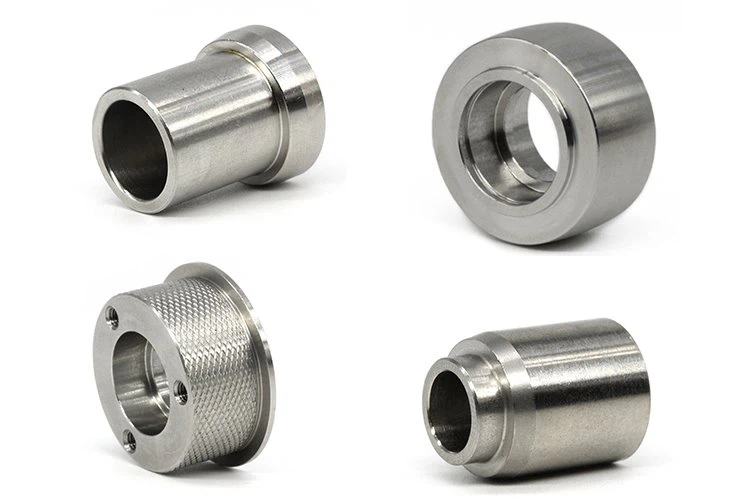
Understanding the Basics of Brass CNC Turned Parts
First off, let me give you a quick rundown on what Brass CNC turned parts are. CNC (Computer Numerical Control) turning is a manufacturing process where a lathe machine uses computerized controls to shape a piece of material, in this case, brass. The process is super precise and can create complex shapes with high accuracy.

Brass is an alloy made primarily of copper and zinc. It's known for its excellent machinability, corrosion resistance, and electrical conductivity. These properties make it a popular choice for a wide range of applications, from plumbing fixtures to electrical components.
Weight Comparison: Brass vs. Other Materials
Now, let's talk about weight. The weight of a material depends on its density, which is basically how much mass it has per unit volume. The density of brass typically ranges from about 8.4 to 8.73 grams per cubic centimeter (g/cm³), depending on the specific composition of the alloy.
Brass vs. Aluminum
Aluminum is a lightweight metal with a density of around 2.7 g/cm³. That means brass is significantly heavier than aluminum. For example, if you have two parts of the same size and shape, one made of brass and the other of aluminum, the brass part will weigh about three times as much as the aluminum one.
This difference in weight can be a big factor when choosing between the two materials. If weight is a critical consideration, like in aerospace or automotive applications where reducing weight can improve fuel efficiency, aluminum might be the better choice. However, if you need a material with better strength, durability, or electrical conductivity, brass could be the way to go.
Brass vs. Stainless Steel
Stainless steel is another commonly used material in CNC machining. Its density varies depending on the specific grade, but it generally falls in the range of 7.75 to 8.05 g/cm³. So, brass is slightly heavier than most types of stainless steel.
The weight difference between brass and stainless steel might not be as significant as that between brass and aluminum, but it can still matter in certain applications. Stainless steel is known for its high strength, corrosion resistance, and heat resistance. If these properties are more important than weight, stainless steel could be the preferred material. On the other hand, if you need a material that's easier to machine and has good electrical conductivity, brass might be a better option.
Brass vs. Plastic
Plastics are generally much lighter than metals. The density of common plastics like polyethylene and polypropylene ranges from about 0.9 to 1.1 g/cm³. This means that brass is several times heavier than plastic.
Plastics are often used when weight is a major concern and the part doesn't require high strength or durability. They're also relatively inexpensive and easy to process. However, if you need a part that can withstand high temperatures, has good electrical conductivity, or requires a high level of precision, brass is likely the better choice.
Applications and the Importance of Weight
The weight of a material can have a significant impact on its suitability for different applications. Let's take a look at a few examples:
Electrical Components
In electrical applications, brass is often used because of its excellent electrical conductivity. The weight of the brass parts might not be a major concern in these cases, as long as the part can be easily installed and doesn't add too much stress to the surrounding components. For example, electrical connectors and terminals made of brass can provide a reliable electrical connection without being overly heavy.
Plumbing Fixtures
Brass is a popular choice for plumbing fixtures because of its corrosion resistance and machinability. The weight of the brass parts can actually be an advantage in some cases, as it gives the fixtures a solid and durable feel. However, in applications where weight needs to be minimized, like in mobile plumbing systems, other materials might be considered.
Automotive and Aerospace Components
In the automotive and aerospace industries, weight is a critical factor. Every extra pound can reduce fuel efficiency and performance. That's why these industries often use lightweight materials like aluminum and carbon fiber. However, brass might still be used in certain applications where its properties, such as strength, durability, and electrical conductivity, are more important than weight.
Our Offerings: Precision Metal Turned Parts
As a supplier of Brass CNC turned parts, we offer a wide range of Precision Metal Turned Parts. Our parts are made with the highest level of precision and quality, ensuring that they meet your exact specifications. Whether you need a small batch of custom parts or a large production run, we have the expertise and equipment to handle your needs.
We also offer other types of CNC turned parts, such as Water Pump Shaft Stainless Steel and Machined Anodized Knob. These parts are made from high-quality materials and are designed to provide reliable performance in a variety of applications.
Conclusion
So, there you have it! The weight of brass CNC turned parts compared to other materials can vary significantly, depending on the specific material and its density. When choosing a material for your project, it's important to consider not only the weight but also other factors such as strength, durability, corrosion resistance, and electrical conductivity.
If you're interested in learning more about our Brass CNC turned parts or other precision metal turned parts, feel free to reach out to us. We'd be happy to discuss your project requirements and help you find the best solution for your needs.
References
- ASM Handbook, Volume 2: Properties and Selection: Nonferrous Alloys and Special-Purpose Materials
- Machining Data Handbook, 4th Edition
- Manufacturing Engineering and Technology, 6th Edition