


As a supplier of copper contacts, I often encounter questions from customers about the suitability of copper contacts for use in control panels. This blog post aims to explore this topic in detail, examining the properties of copper contacts, their advantages and limitations, and their applications in control panels.
Properties of Copper Contacts
Copper is a highly conductive metal, which makes it an excellent choice for electrical contacts. It has a high electrical conductivity, which means that it can carry large amounts of current with minimal resistance. This property is crucial in control panels, where electrical signals need to be transmitted efficiently and reliably.
In addition to its high conductivity, copper also has good thermal conductivity. This allows it to dissipate heat effectively, which is important in applications where high currents can generate significant amounts of heat. In control panels, where components may be operating continuously, the ability to manage heat is essential for maintaining the reliability and longevity of the system.
Copper is also a relatively soft metal, which makes it easy to form into various shapes and sizes. This flexibility allows for the production of customized copper contacts that can meet the specific requirements of different control panel designs. Whether it's a simple rectangular contact or a complex multi - pronged connector, copper can be shaped to fit the application.
Advantages of Using Copper Contacts in Control Panels
High Conductivity and Low Resistance
The high electrical conductivity of copper contacts results in low resistance in the electrical circuit. This means that there is less power loss due to resistance heating, which can improve the overall efficiency of the control panel. Lower resistance also reduces the risk of overheating, which can cause damage to other components in the panel.
Good Corrosion Resistance
Copper forms a thin oxide layer on its surface when exposed to air, which acts as a protective barrier against further corrosion. This corrosion resistance is important in control panels, which may be installed in various environments, including industrial settings where there may be exposure to moisture, chemicals, or other corrosive substances. A corrosion - resistant contact ensures long - term reliability and reduces the need for frequent maintenance or replacement.
Durability
Copper contacts are relatively durable and can withstand repeated use and mechanical stress. In control panels, contacts may be subject to vibration, shock, and frequent switching operations. Copper's inherent strength and ductility allow it to maintain its shape and electrical performance over time, even under these challenging conditions.
Cost - Effectiveness
Compared to some other metals used for electrical contacts, such as silver, copper is more cost - effective. This makes it an attractive option for manufacturers of control panels, especially when large quantities of contacts are required. The cost - effectiveness of copper contacts does not compromise their performance, as they still offer excellent electrical and mechanical properties.
Limitations of Copper Contacts
Oxidation in Harsh Environments
While copper has some corrosion resistance, in extremely harsh environments, such as those with high humidity, high sulfur content, or strong acids, the oxide layer may not provide sufficient protection. In these cases, the oxidation of copper can increase the contact resistance over time, which may affect the performance of the control panel. To mitigate this issue, copper contacts can be coated with other materials, such as tin or nickel, to enhance their corrosion resistance.
Softness and Wear
Copper's softness, while advantageous for forming, can also be a drawback in applications where there is significant mechanical wear. In high - load or high - frequency switching applications, the contacts may experience wear and deformation, which can lead to increased contact resistance and reduced reliability. In such cases, more wear - resistant materials or surface treatments may be required.
Applications of Copper Contacts in Control Panels
Circuit Breakers
In circuit breakers, copper contacts are used to make and break the electrical circuit. When a fault occurs, the contacts separate to interrupt the current flow. The high conductivity and durability of copper contacts ensure that they can handle the high currents associated with fault conditions and operate reliably over multiple switching cycles.
Relays
Relays are electromagnetic switches used to control high - power circuits with low - power signals. Copper contacts are commonly used in relays due to their ability to carry the required current and their good electrical conductivity. The softness of copper also allows for a good contact surface, which helps to ensure a reliable connection.

Contactors
Contactors are used to control large amounts of electrical power in industrial applications. Copper contacts in contactors can handle high - current loads and are designed to withstand the arcing that occurs during switching operations. The thermal conductivity of copper helps to dissipate the heat generated by the arcing, preventing damage to the contacts.
Comparison with Other Contact Materials
Brass Contacts
Brass is an alloy of copper and zinc. [Brass Contacts]( /stamping - parts/copper - contacts/brass - contacts.html) offer some advantages over pure copper contacts. Brass is generally more resistant to wear and has better mechanical properties than copper. It is also less prone to oxidation in some environments. However, brass has a lower electrical conductivity than copper, which may result in slightly higher power losses in the circuit.

Silver Contacts
Silver is the most conductive metal, with even higher electrical conductivity than copper. [Silver contacts](https://example.com/silver - contacts) are often used in applications where extremely low resistance is required, such as in high - precision electronic equipment. However, silver is much more expensive than copper, which makes it less cost - effective for large - scale control panel applications.
Stamping and Manufacturing of Copper Contacts
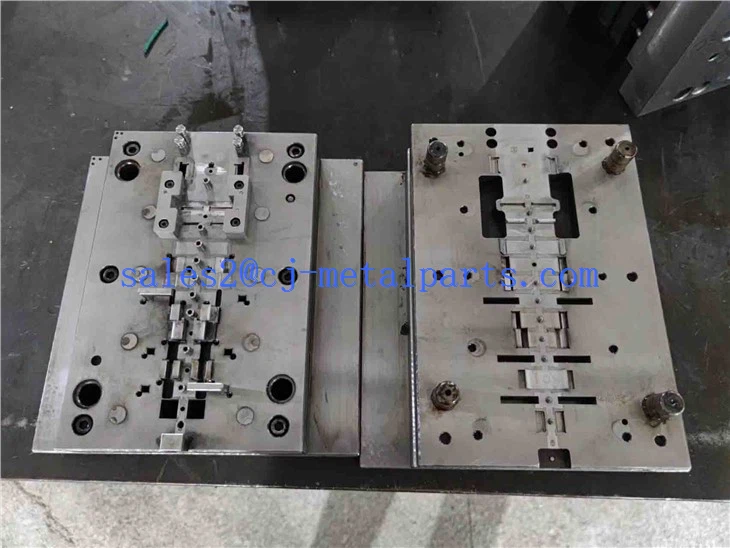
The manufacturing process of copper contacts often involves stamping. [Brass Stamping]( /stamping - parts/copper - contacts/brass - stamping.html) and [Stamping Press Parts]( /stamping - parts/copper - contacts/stamping - press - parts.html) are important techniques for producing copper contacts with high precision and efficiency. Stamping allows for the mass production of contacts in various shapes and sizes, which can be customized to meet the specific requirements of different control panel designs.
During the stamping process, copper sheets are fed into a stamping press, where a die is used to cut and shape the contacts. The stamping process can produce contacts with tight tolerances and smooth surfaces, which are essential for good electrical contact. After stamping, the contacts may undergo additional processes, such as plating or heat treatment, to improve their performance and durability.
Conclusion
In conclusion, copper contacts can be effectively used in control panels. Their high electrical and thermal conductivity, good corrosion resistance, durability, and cost - effectiveness make them a popular choice for a wide range of applications in control panels, including circuit breakers, relays, and contactors. While they have some limitations, such as oxidation in harsh environments and wear in high - load applications, these can be mitigated through appropriate coating and surface treatments.

If you are in the market for high - quality copper contacts for your control panels, we are here to help. Our company specializes in the production of copper contacts using advanced stamping and manufacturing techniques. We can provide customized solutions to meet your specific requirements. Whether you need a small quantity of contacts for a prototype or a large - scale production run, we have the expertise and capabilities to deliver. Contact us today to discuss your procurement needs and start a fruitful business partnership.
References
- "Electrical Contacts: Principles and Applications" by P. J. McPherson
- "Handbook of Electrical Contacts" edited by R. Holm
- "Materials for Electrical Contacts" by K. Miyashita