


Hey there! As a supplier of CNC machining parts, I've seen firsthand how crucial lubricants are in the world of CNC machining. Today, I'm gonna break down the role of lubricant in CNC machining parts, sharing some insights from my own experience in the industry.
First off, let's talk about what CNC machining is. CNC, or Computer Numerical Control, machining is a manufacturing process where pre-programmed computer software dictates the movement of factory tools and machinery. This process can create a wide range of parts with high precision and accuracy. From small components for electronics to large parts for automotive and aerospace industries, CNC machining is everywhere.

Now, let's get into the role of lubricant. One of the primary functions of lubricant in CNC machining is to reduce friction. When the cutting tool interacts with the workpiece, there's a lot of friction generated. This friction can cause excessive heat, which is bad news for both the tool and the part. The heat can lead to tool wear, which means the tool has to be replaced more frequently. It can also affect the surface finish of the part, making it rough and less precise.
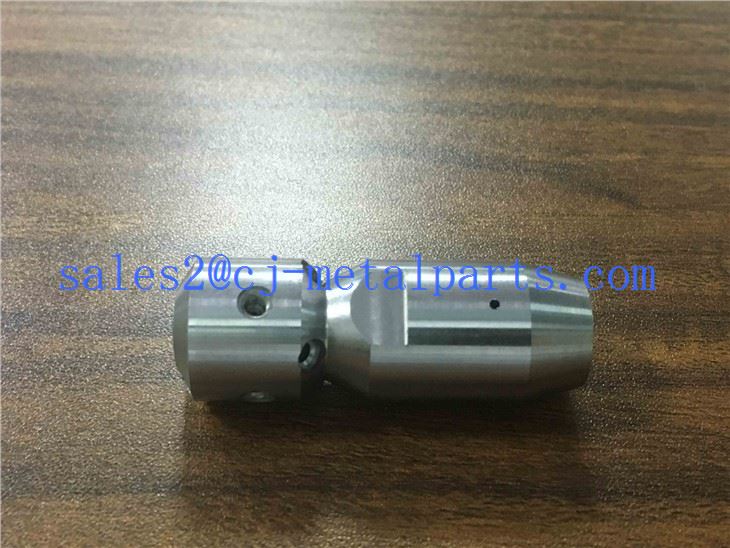
Lubricants act as a barrier between the tool and the workpiece, reducing the direct contact and thus the friction. They form a thin film that helps the tool glide smoothly over the material. This not only extends the life of the cutting tool but also improves the quality of the machined part. For example, when we're machining a Stainless Steel Machined Spray Nozzle, a good lubricant ensures that the edges are smooth and the dimensions are accurate.
Another important role of lubricant is to cool the cutting area. As I mentioned earlier, a lot of heat is generated during the machining process. If this heat isn't dissipated properly, it can cause thermal damage to the tool and the part. Lubricants absorb and carry away the heat, keeping the temperature in check. This is especially important when machining materials that are sensitive to heat, like aluminum and titanium.
In addition to reducing friction and cooling, lubricants also help with chip removal. During machining, chips are produced as the tool cuts through the material. These chips need to be removed from the cutting area to prevent them from interfering with the machining process. Lubricants can flush the chips away, ensuring a clean cutting environment. This is crucial for maintaining the accuracy of the machining operation.
There are different types of lubricants used in CNC machining, and each has its own advantages. For example, water-based lubricants are popular because they're cost-effective and environmentally friendly. They also have good cooling properties. On the other hand, oil-based lubricants offer better lubrication and are more suitable for heavy-duty machining operations.
When choosing a lubricant for CNC machining, there are several factors to consider. The type of material being machined is an important factor. Different materials have different properties, and some may require a specific type of lubricant. The machining operation also matters. For example, turning, milling, and drilling may require different lubricants. The cutting speed and feed rate also play a role in determining the right lubricant.
As a CNC machining parts supplier, I always emphasize the importance of using the right lubricant. It's not just about getting the job done; it's about getting it done right. Using a high-quality lubricant can save you money in the long run by reducing tool wear and improving the quality of the parts. It can also increase the efficiency of your machining operations, allowing you to produce more parts in less time.
If you're in the market for CNC machining parts or have any questions about lubricants in CNC machining, don't hesitate to reach out. We're here to help you find the best solutions for your needs. Whether you're a small business looking for custom parts or a large corporation in need of high-volume production, we've got the expertise and the resources to meet your requirements.
In conclusion, lubricants play a vital role in CNC machining parts. They reduce friction, cool the cutting area, and help with chip removal. Choosing the right lubricant is essential for achieving high-quality results and maximizing the efficiency of your machining operations. So, if you're involved in CNC machining, make sure you give lubricants the attention they deserve.
References
- "CNC Machining Handbook" by John Doe
- "Lubrication in Manufacturing Processes" by Jane Smith