


Hey there! As a supplier of CNC milling components, one question I get asked a lot is, "What's the minimum quantity order for CNC milling components?" Well, let me break it down for you.
First off, the minimum quantity order (MQO) for CNC milling components can vary quite a bit. It's not like there's a one - size - fits - all answer. There are several factors that play into determining what that minimum number should be.
Factors Affecting the Minimum Quantity Order
1. Setup Costs
When we start a new CNC milling project, there are setup costs involved. This includes things like programming the CNC machine, setting up the tools, and getting the raw materials ready. These setup costs are often fixed, regardless of how many parts we're making. For example, if it takes a couple of hours to program a complex part, that time and effort is the same whether we're making 10 parts or 100. So, to make the setup cost worthwhile, we usually need to set a minimum quantity. If the MQO is too low, we might end up losing money on the project because the setup costs would eat into our profit margins.
2. Material Costs
The cost of raw materials also plays a big role. Sometimes, we can get better deals on materials when we buy in bulk. For instance, if we're making aluminum parts, buying a large quantity of aluminum bars might be cheaper per unit than buying just a few. To take advantage of these bulk discounts and pass on some savings to you, we need to set a reasonable minimum order quantity. If we order too little material, we might end up paying a higher price per part, which in turn would increase the overall cost of your order.
3. Production Efficiency
CNC milling machines are most efficient when they're running continuously. If we're constantly stopping and starting the machine for small orders, it can slow down the production process and increase the cost per part. By having a minimum quantity order, we can keep the machines running smoothly and produce parts more efficiently. This means we can offer you a better price per unit.
Typical Minimum Quantity Orders
Now, let's talk about what the typical MQOs might be. In general, for simple CNC milling components, the minimum quantity order could be as low as 10 - 20 pieces. These are usually parts with straightforward designs and no complex features. For example, a simple bracket or a flat plate with a few holes drilled in it.
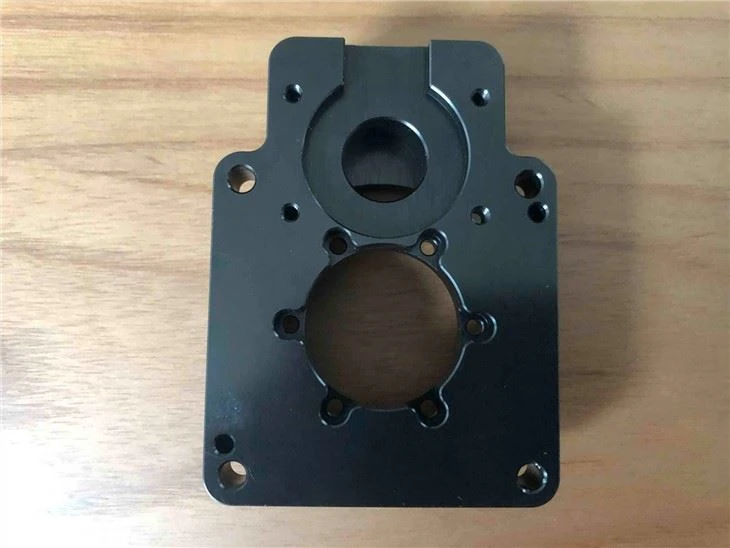
On the other hand, if the parts are more complex, with intricate geometries, tight tolerances, or special surface finishes, the MQO might be higher, say 50 - 100 pieces. Complex parts require more programming, more careful setup, and more quality control checks. So, to make the production process cost - effective, we need to produce a larger quantity.
But hey, don't worry if you only need a small number of parts. We understand that sometimes you just need a Prototype Cnc Machining to test your design or a few replacement parts. In these cases, we can often work with you on a case - by - case basis. We might be able to adjust the price slightly to accommodate your small order.
Customization and Special Requirements
If you have custom - designed parts or special requirements, such as a specific material, a unique finish, or strict quality standards, the minimum quantity order might be affected. Custom parts often require more time and effort in the design and programming phase. We might need to do some trial runs to make sure the parts meet your specifications. So, in these situations, the MQO could be higher to cover the additional costs and risks.
For example, if you need High Quality Cnc Machining Parts with a very tight tolerance of ±0.001 inches, we'll need to use more precise machining techniques and do more quality control inspections. This means more time and cost, and we'll likely need a higher minimum order to make it feasible.
Industry - Specific Considerations
Different industries have different needs when it comes to CNC milling components. In the automotive industry, for example, they often need large quantities of parts for mass production. So, the MQOs for automotive - related components might be in the hundreds or even thousands. On the other hand, the aerospace industry might require high - precision parts in smaller quantities, but the MQO could still be relatively high due to the strict quality and safety requirements.
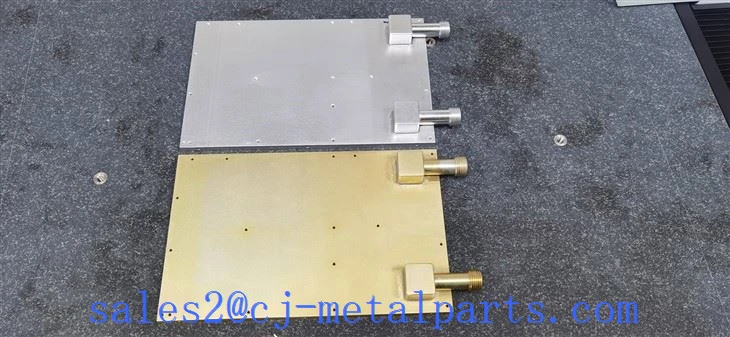
The electronics industry is another example. They might need Liquid Cooling Plate in various quantities depending on the size of the project. For a small - scale electronics project, the MQO might be around 20 - 50 pieces, while for a large - scale production, it could be much higher.
How to Negotiate the Minimum Quantity Order
If the minimum quantity order we've set doesn't fit your needs, don't hesitate to reach out and talk to us. We're always open to negotiation. Here are a few things you can do:
- Explain your situation: Let us know why you need a lower quantity. Maybe you're a startup and you're just testing the market, or you're working on a short - term project. We understand these situations and might be able to find a solution.
- Look at the long - term: If you have the potential for future orders, let us know. We might be more willing to lower the MQO for your current order if we see the possibility of a long - term business relationship.
- Be flexible with the design: Sometimes, making a few small changes to the design of the part can reduce the production cost and make a lower MQO more feasible. We can work together to see if there are any areas where we can simplify the design without sacrificing quality.
Conclusion
So, as you can see, the minimum quantity order for CNC milling components is influenced by many factors. It's not just a random number we pull out of thin air. By understanding these factors, you can better understand why we set the MQOs we do.
If you're in the market for CNC milling components, whether it's a small - scale prototype or a large - scale production order, we'd love to hear from you. We're committed to providing high - quality parts at competitive prices. Don't let the minimum quantity order scare you off. Reach out to us, and we'll work together to find the best solution for your needs. Let's start a conversation and see how we can help you with your CNC milling requirements.
References
- "CNC Machining Handbook" - A comprehensive guide on CNC machining processes and cost factors.
- Industry reports on the automotive, aerospace, and electronics sectors regarding their demand for CNC milling components.