


Hey there! As a supplier of brass connectors, I often get asked about the insulation resistance of these nifty little components. So, let's dive right in and break it down.
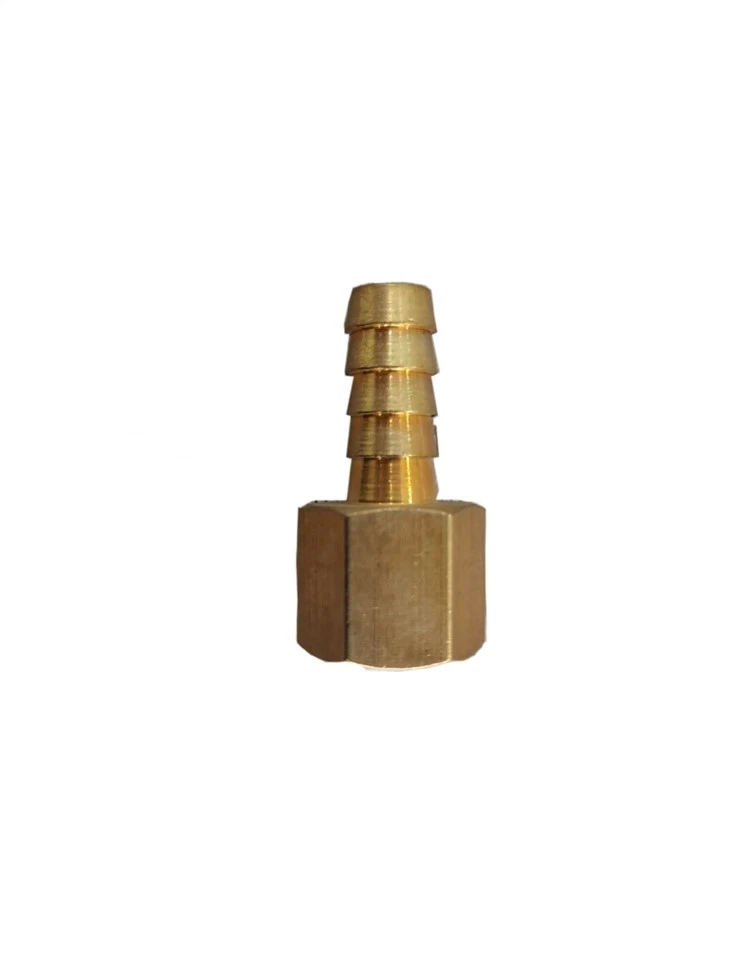

First off, what are brass connectors? Well, they're super useful parts that come in all shapes and sizes. You've got the Brass Machined Sleeve, which is precision - made for a variety of applications. Then there's the Brass Connector for Hose, perfect for connecting hoses securely. And of course, the Brass Electrical Terminal Connector, which is crucial in electrical systems.
Now, let's talk about insulation resistance. In simple terms, insulation resistance is a measure of how well an insulating material resists the flow of electric current. For brass connectors, this is an important factor, especially in electrical applications.
Brass itself is a metal alloy mainly composed of copper and zinc. Metals are generally good conductors of electricity, which means they have low resistance to the flow of electrons. However, when we're talking about insulation resistance in the context of brass connectors, we're usually referring to the insulation around the brass part or the ability of the connector to prevent unwanted electrical leakage.
In electrical systems, a high insulation resistance is desirable. It helps to ensure that the electrical current flows through the intended path and not through other parts of the system, which could cause short - circuits, malfunctions, or even safety hazards.
The insulation resistance of brass connectors can be affected by several factors. One of the main factors is the quality of the insulation material used. If the insulation is of poor quality, it may break down over time, leading to a decrease in insulation resistance. Moisture is another big culprit. If the brass connectors are exposed to a humid environment or come into contact with water, the insulation can absorb moisture, which reduces its effectiveness and lowers the insulation resistance.
Temperature also plays a role. High temperatures can cause the insulation material to expand and become less dense, which can increase the likelihood of electrical leakage and thus lower the insulation resistance. On the other hand, extremely low temperatures can make the insulation brittle, which may also lead to a decrease in its insulating properties.
To measure the insulation resistance of brass connectors, we use a special instrument called an insulation resistance tester. This device applies a known voltage to the connector and measures the resulting current. By using Ohm's law (R = V/I, where R is resistance, V is voltage, and I is current), we can calculate the insulation resistance.
As a supplier, we take great care in ensuring that our brass connectors have high insulation resistance. We use high - quality insulation materials and subject our products to rigorous testing. For example, we test our connectors in different environmental conditions to make sure they can withstand moisture, temperature changes, and other factors that could affect their insulation resistance.
When it comes to choosing the right brass connector for your project, it's important to consider the insulation resistance requirements. If you're working on a high - voltage electrical system, you'll need connectors with a very high insulation resistance. On the other hand, for low - voltage applications, the requirements may not be as strict.
We offer a wide range of brass connectors to meet different needs. Whether you need a Brass Machined Sleeve for a mechanical connection or a Brass Electrical Terminal Connector for an electrical circuit, we've got you covered.
Our team of experts is always available to help you choose the right connector and answer any questions you may have about insulation resistance or other technical aspects. We understand that every project is unique, and we're committed to providing the best solutions for our customers.
If you're in the market for high - quality brass connectors with excellent insulation resistance, don't hesitate to reach out. We're here to make the procurement process as smooth as possible. Whether you're a small business or a large corporation, we can work with you to meet your specific requirements.
In conclusion, the insulation resistance of brass connectors is an important factor to consider, especially in electrical applications. By understanding the factors that affect it and choosing the right connectors, you can ensure the safety and reliability of your electrical systems. So, if you're looking for top - notch brass connectors, give us a shout, and let's start a great business relationship.
References
- Electrical Engineering Handbook, CRC Press
- Fundamentals of Electrical Insulation, IEEE Press