


As a seasoned stamping tooling supplier, I've witnessed firsthand the various challenges that come with the manufacturing and use of stamping tools. Fractures in stamping tooling can be a significant headache, leading to production delays, increased costs, and potential quality issues. In this blog post, I'll delve into the common fracture reasons of stamping tooling, drawing on my years of experience in the industry.
Material - Related Fracture Reasons
One of the primary factors contributing to stamping tooling fractures is the material itself. The quality and properties of the tooling material play a crucial role in its performance and durability.
Poor Material Quality
Low - grade materials may contain impurities or have inconsistent internal structures. For example, if the steel used in stamping tooling has a high sulfur content, it can form brittle sulfide inclusions. These inclusions act as stress concentrators, making the tooling more prone to cracking under the high - stress conditions of stamping operations. When the stamping force is applied, the stress around these inclusions exceeds the material's strength, leading to the initiation and propagation of cracks.
Incorrect Material Selection
Choosing the wrong material for a specific stamping application can also result in fractures. Different stamping operations have different requirements in terms of hardness, toughness, and wear resistance. For instance, if a stamping tool for a high - volume production of thick - gauge steel parts is made from a material with insufficient toughness, it may fracture under the repeated impact and high - pressure conditions. On the other hand, using a material that is too hard and brittle for a more delicate stamping job can also lead to premature cracking. A good example is using a high - carbon tool steel for a progressive stamping operation where the tool needs to withstand multiple hits without cracking. Progressive Stamping Tool requires a balance of hardness and toughness to ensure long - term performance.
Design - Related Fracture Reasons
The design of stamping tooling is another critical aspect that can influence its susceptibility to fractures.
Unreasonable Geometric Design
Sharp corners and sudden changes in cross - section are common design flaws that can cause stress concentration. When the stamping force is applied, the stress at these areas is much higher than in other parts of the tooling. For example, if a stamping die has a sharp internal corner, the stress concentration factor can be significantly increased, leading to a higher risk of cracking. A well - designed stamping tool should have smooth transitions and rounded corners to distribute the stress evenly.
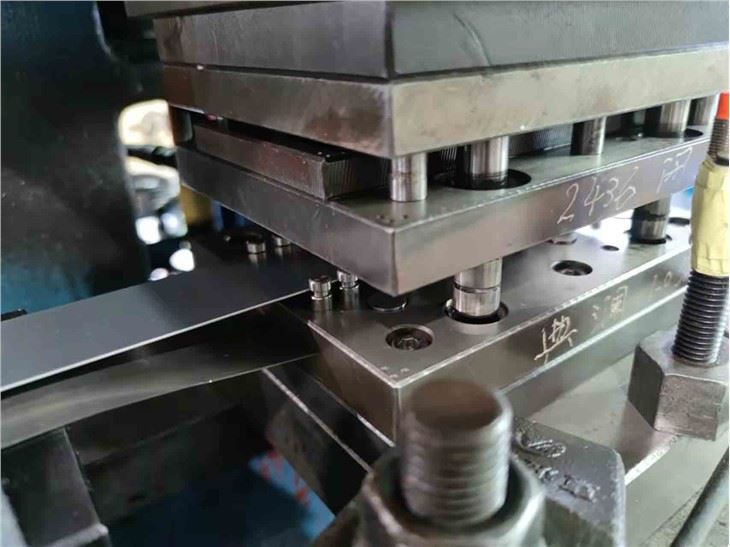
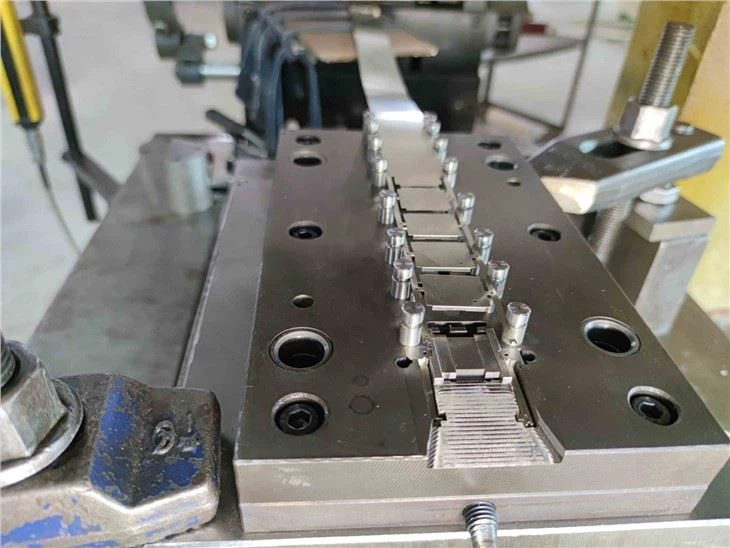
Inadequate Reinforcement
Insufficient reinforcement in areas that experience high stress can also lead to fractures. In complex stamping operations, certain parts of the tooling, such as the punch tip or the die cavity, may be subjected to extremely high forces. Without proper reinforcement, these areas are likely to fail. For example, in a stamping die for a Stamping Die For Steel Bracket, the areas around the bracket's bends and holes need to be reinforced to withstand the deformation forces during stamping.
Manufacturing - Related Fracture Reasons
The manufacturing process of stamping tooling can introduce defects that may lead to fractures.
Heat Treatment Defects
Heat treatment is a critical step in the manufacturing of stamping tooling as it determines the material's hardness and toughness. However, improper heat treatment can cause various problems. Over - heating during quenching, for example, can lead to grain growth and the formation of brittle martensite. This can reduce the tooling's toughness and make it more prone to cracking. On the other hand, insufficient quenching or tempering can result in a material that is too soft and lacks the necessary hardness for stamping operations.
Machining Defects
Poor machining quality can also contribute to tooling fractures. Rough surfaces, machining marks, and improper tolerances can act as stress concentrators. For example, if the surface finish of a stamping die is not smooth, the uneven surface can cause local stress concentration during stamping, leading to crack initiation. Additionally, inaccurate machining can result in misaligned components, which can cause uneven loading and premature failure of the tooling.
Operational - Related Fracture Reasons
The way stamping tooling is used and maintained in the production environment can also affect its lifespan and susceptibility to fractures.
Excessive Stamping Force
Applying too much stamping force is a common cause of tooling fractures. This can happen due to incorrect setting of the stamping press or an attempt to stamp materials that are beyond the tooling's capacity. For example, if a stamping press is set to apply a force that is much higher than the recommended value for a particular stamping tool, the tooling may not be able to withstand the stress, leading to fractures.
Improper Lubrication
Lack of proper lubrication during stamping operations can increase friction and heat generation. This can cause the tooling to wear out faster and also increase the risk of cracking. Lubrication helps to reduce the friction between the tooling and the workpiece, as well as dissipate heat. Without adequate lubrication, the increased heat can cause thermal stress in the tooling, which can lead to fractures over time.
Inadequate Maintenance
Neglecting regular maintenance of stamping tooling can also lead to fractures. Worn - out components, such as punches and dies, should be replaced in a timely manner. If a worn - out punch is used for too long, it can cause uneven loading on the die, leading to cracking. Additionally, regular cleaning and inspection of the tooling can help to detect early signs of wear and damage, allowing for preventive measures to be taken.
Conclusion
In conclusion, fractures in stamping tooling can be caused by a variety of factors, including material quality, design, manufacturing, and operation. As a stamping tooling supplier, it is our responsibility to ensure that we provide high - quality tooling that is designed and manufactured to withstand the rigors of stamping operations. By understanding the common fracture reasons, we can take proactive measures to prevent these issues and provide our customers with reliable stamping solutions.
If you are in the market for stamping tooling, whether it's a Stamping Die For Steel Bracket, a Progressive Stamping Tool, or Metal Tooling For Shielding Case, we are here to assist you. Our team of experts can help you select the right tooling for your specific application, ensuring optimal performance and longevity. Contact us to start a procurement discussion and let us help you find the best stamping tooling solutions for your business.
References
- Kalpakjian, S., & Schmid, S. R. (2008). Manufacturing Engineering and Technology. Pearson Prentice Hall.
- Dieter, G. E. (1986). Mechanical Metallurgy. McGraw - Hill.
- Groover, M. P. (2010). Fundamentals of Modern Manufacturing: Materials, Processes, and Systems. Wiley.