


In the dynamic landscape of manufacturing, staying abreast of new technologies is crucial for stamping tooling suppliers like us. The integration of innovative manufacturing technologies not only enhances the efficiency and quality of stamping tooling but also provides a competitive edge in the market. In this blog post, I will share some insights on how we, as a stamping tooling supplier, can effectively use new manufacturing technologies in stamping tooling.
1. Understanding the New Manufacturing Technologies
Before diving into the application of new technologies, it's essential to have a clear understanding of what these technologies entail. Some of the prominent new manufacturing technologies in the stamping tooling industry include:
Computer - Aided Design (CAD) and Computer - Aided Manufacturing (CAM)
CAD allows us to create detailed 3D models of stamping tools with high precision. We can visualize the tool design from different angles, simulate the stamping process, and make necessary adjustments before the actual manufacturing. CAM, on the other hand, uses the CAD models to generate machine - readable instructions for the manufacturing equipment. This seamless integration of CAD and CAM significantly reduces the design - to - production time and minimizes errors.
Additive Manufacturing (3D Printing)
Additive manufacturing has revolutionized the way we produce stamping tooling components. Instead of traditional subtractive manufacturing methods, 3D printing builds parts layer by layer. This technology enables us to create complex geometries that were previously difficult or impossible to manufacture. For example, we can produce custom - designed inserts with internal cooling channels, which can improve the heat dissipation during the stamping process and extend the tool life.
Intelligent Manufacturing Systems
Intelligent manufacturing systems incorporate sensors, data analytics, and automation. Sensors can be installed on stamping tools to monitor parameters such as temperature, pressure, and vibration. The data collected from these sensors can be analyzed in real - time to detect potential issues, predict tool wear, and optimize the stamping process. Automation, including robotic loading and unloading, can improve the production efficiency and reduce labor costs.
2. Implementing New Technologies in Design
Leveraging CAD for Optimal Design
When designing stamping tools, CAD software provides us with a wide range of tools and features. We can use CAD to optimize the die layout, ensuring that the material flow is smooth during the stamping process. For instance, by simulating the metal flow in CAD, we can reduce the likelihood of defects such as cracks and wrinkles. Additionally, CAD allows us to perform stress analysis on the tool components, which helps in selecting the appropriate materials and dimensions to ensure the tool's durability.
Incorporating 3D Printing in Prototyping
3D printing is an excellent tool for rapid prototyping in stamping tooling. We can quickly produce prototypes of new tool designs using 3D printing technology. This not only saves time but also reduces costs associated with traditional prototyping methods. By testing the 3D - printed prototypes, we can validate the design concept, identify potential problems, and make necessary modifications before mass - producing the actual tools. For example, if we are designing a Progressive Die Stamping tool, a 3D - printed prototype can help us evaluate the die's performance and adjust the design accordingly.
3. Applying New Technologies in Manufacturing
Integrating CAM for Precision Machining
CAM software is essential for translating the CAD designs into precise machining operations. We can program the machining centers to cut, mill, and drill the stamping tool components with high accuracy. CAM also enables us to optimize the machining paths, reducing the machining time and improving the surface finish of the components. For complex stamping tools, such as Metal Stamping Dies, CAM can ensure that all the features are machined to the exact specifications.
Using 3D Printing for Custom Components
In addition to prototyping, 3D printing can be used to produce custom - made components for stamping tools. For example, we can print inserts with unique shapes and internal structures. These inserts can be used to enhance the performance of the stamping tool, such as improving the formability of the metal or reducing the wear on the die surface. When producing Metal Tooling For Shielding Case, 3D - printed components can be tailored to meet the specific requirements of the shielding case design.

Implementing Intelligent Manufacturing Systems
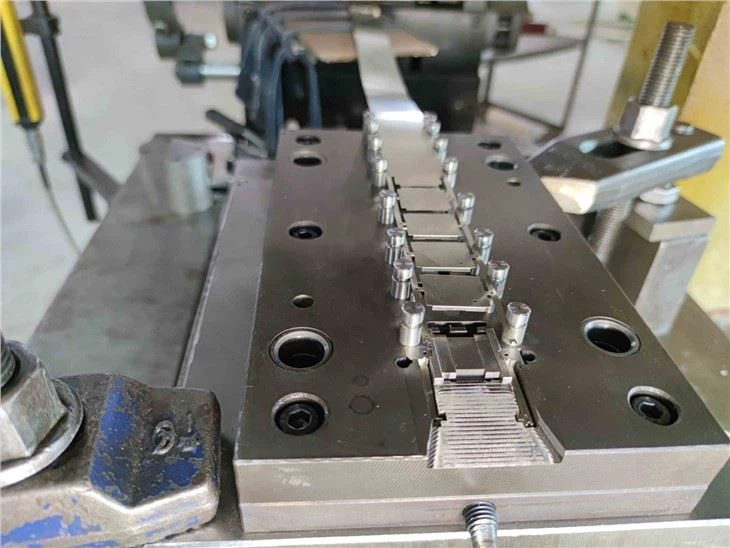
Intelligent manufacturing systems can be integrated into the stamping tooling production process. By installing sensors on the stamping presses and tools, we can collect real - time data on various parameters. This data can be used to adjust the stamping process in real - time, ensuring consistent quality. For example, if the temperature of the die exceeds a certain threshold, the system can automatically adjust the cooling rate. Automation can also be used to improve the production efficiency. Robots can be programmed to load and unload the workpieces, reducing the cycle time and minimizing human errors.
4. Quality Control with New Technologies
Non - Destructive Testing (NDT)
New technologies have also improved the quality control process in stamping tooling. Non - destructive testing methods, such as ultrasonic testing and X - ray inspection, can be used to detect internal defects in the stamping tools without damaging them. These techniques are particularly useful for detecting cracks and porosity in the tool components. By using NDT, we can ensure that the stamping tools meet the required quality standards before they are delivered to the customers.
Data - Driven Quality Management
With the help of intelligent manufacturing systems, we can implement data - driven quality management. The data collected from the sensors on the stamping tools and production equipment can be analyzed to identify trends and patterns related to quality. For example, if a particular type of defect occurs more frequently under certain process conditions, we can use the data to adjust the process parameters to prevent future occurrences. This proactive approach to quality control can significantly improve the overall quality of the stamping tooling.
5. Training and Skill Development
Employee Training Programs
To effectively use new manufacturing technologies in stamping tooling, our employees need to be trained. We can organize training programs on CAD, CAM, 3D printing, and intelligent manufacturing systems. These programs should cover both theoretical knowledge and practical skills. For example, employees can learn how to operate the 3D printers and use the CAD software to design stamping tools. By investing in employee training, we can ensure that our workforce is capable of leveraging the new technologies to their full potential.
Keeping Up with Technological Advancements
The field of manufacturing technology is constantly evolving. As a stamping tooling supplier, we need to stay updated with the latest technological advancements. We can participate in industry conferences, workshops, and training courses to learn about new technologies and best practices. Additionally, we can collaborate with research institutions and technology providers to explore new applications of manufacturing technologies in stamping tooling.
Conclusion
In conclusion, the adoption of new manufacturing technologies in stamping tooling is essential for our competitiveness in the market. By understanding and implementing technologies such as CAD/CAM, 3D printing, and intelligent manufacturing systems in design, manufacturing, and quality control, we can improve the efficiency, quality, and innovation of our stamping tooling products. However, it is important to note that the successful implementation of these technologies requires proper training and continuous learning.
If you are interested in our stamping tooling products and want to explore how these new technologies can benefit your business, we invite you to contact us for procurement and further discussions. We are committed to providing high - quality stamping tooling solutions tailored to your specific needs.
References
- Dornfeld, D., Min, S., & Takeuchi, Y. (2007). Handbook of Machining with Grinding Applications. CRC Press.
- Gibson, I., Rosen, D. W., & Stucker, B. (2014). Additive Manufacturing Technologies: 3D Printing, Rapid Prototyping, and Direct Digital Manufacturing. Springer.
- Groover, M. P. (2010). Fundamentals of Modern Manufacturing: Materials, Processes, and Systems. Wiley.