


As a trusted supplier of CNC aluminium parts, ensuring the dimensional accuracy of our products is of utmost importance. Dimensional accuracy not only affects the functionality and performance of the parts but also determines their compatibility with other components in the final assembly. In this blog post, I will share some key strategies and best practices that we employ to guarantee the high dimensional accuracy of our CNC aluminium parts.
Understanding the Importance of Dimensional Accuracy
Before delving into the specific methods, it's crucial to understand why dimensional accuracy is so critical. In many industries, such as aerospace, automotive, and electronics, even the slightest deviation from the specified dimensions can lead to significant problems. For example, in aerospace applications, a small error in the dimensions of a critical part could compromise the safety and reliability of an aircraft. In the automotive industry, inaccurate parts can cause poor performance, increased wear and tear, and even safety hazards. In electronics, precise dimensions are essential for proper fit and function of components.
Precise Design and Programming
The first step in ensuring dimensional accuracy starts with the design and programming phase. Our team of experienced engineers uses advanced CAD/CAM software to create detailed 3D models of the parts. These models serve as the blueprint for the machining process and allow us to simulate the cutting operations to identify any potential issues before the actual machining begins.
During the programming stage, we carefully select the appropriate cutting tools, feeds, and speeds based on the material properties and the complexity of the part. We also take into account factors such as tool wear, thermal expansion, and vibration to optimize the machining parameters for maximum accuracy. By using precise programming techniques, we can minimize the chances of errors and ensure that the final part meets the exact specifications.

High - Quality Machining Equipment
Investing in state - of - the - art CNC machining equipment is another crucial factor in achieving high dimensional accuracy. Our manufacturing facility is equipped with the latest multi - axis CNC milling and turning machines, which offer superior precision and repeatability. These machines are capable of performing complex machining operations with high levels of accuracy, thanks to their advanced control systems and high - resolution encoders.
We also regularly maintain and calibrate our machining equipment to ensure that it operates at its optimal performance. This includes checking the alignment of the axes, the accuracy of the cutting tools, and the stability of the machine structure. By keeping our equipment in top condition, we can minimize the effects of mechanical wear and tear and ensure consistent dimensional accuracy across all our products.
Material Selection and Preparation
The choice of aluminium material can have a significant impact on the dimensional accuracy of the parts. We carefully select high - quality aluminium alloys that have excellent machinability and dimensional stability. Different aluminium alloys have different properties, such as hardness, ductility, and thermal conductivity, which can affect the machining process and the final dimensions of the part.
Before machining, we also perform proper material preparation, such as annealing and stress relieving. Annealing helps to improve the machinability of the aluminium by reducing its hardness and internal stresses. Stress relieving is essential to prevent distortion of the part during machining, especially for complex shapes and thin - walled components.
In - Process Inspection
In - process inspection is a critical step in ensuring dimensional accuracy. We use a variety of inspection tools and techniques, such as coordinate measuring machines (CMMs), optical comparators, and micrometers, to monitor the dimensions of the parts at various stages of the machining process.

By conducting in - process inspections, we can detect any deviations from the specifications early on and make the necessary adjustments to the machining parameters. This helps to prevent the production of defective parts and ensures that the final product meets the required dimensional accuracy.
Quality Control and Final Inspection
Once the machining process is complete, our parts undergo a comprehensive final inspection. Our quality control team uses the same advanced inspection tools and techniques to verify that the parts meet all the specified dimensions and tolerances. We also perform additional tests, such as surface finish analysis and hardness testing, to ensure the overall quality of the parts.
Any parts that do not meet the required standards are either re - worked or scrapped. This strict quality control process ensures that only the highest - quality CNC aluminium parts are delivered to our customers.
Continuous Improvement
We believe in continuous improvement and are constantly looking for ways to enhance the dimensional accuracy of our CNC aluminium parts. We invest in research and development to explore new machining techniques and materials that can improve the precision and quality of our products.
We also collect and analyze data from our production processes to identify areas for improvement. By using statistical process control (SPC) methods, we can monitor the performance of our machining operations and make data - driven decisions to optimize the process and reduce variability.
Examples of Our High - Precision Products
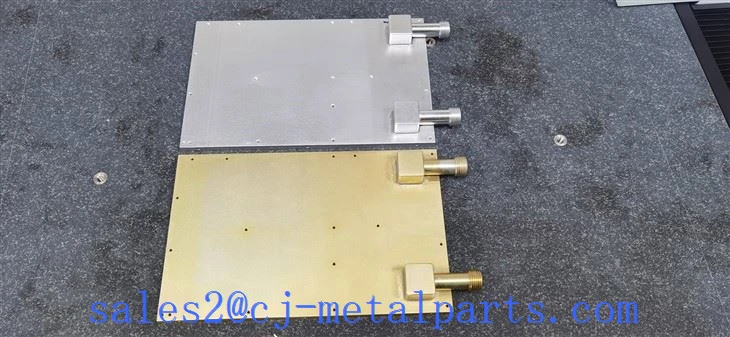
We have a wide range of CNC aluminium parts that showcase our commitment to dimensional accuracy. For instance, our Liquid Cooling Plate is designed with precise channels and dimensions to ensure efficient heat transfer. These plates are used in various industries, including electronics and automotive, where precise cooling is essential.
Our Brass Cnc Machining Parts are also manufactured with high dimensional accuracy. Brass offers excellent machinability, and our advanced machining techniques allow us to produce parts with tight tolerances, ensuring a perfect fit in the final assembly.
Another example is our Billet Oil Filter Housing. These housings are critical components in automotive engines, and their dimensional accuracy is crucial for proper oil filtration and engine performance.
Conclusion
Ensuring the dimensional accuracy of CNC aluminium parts is a multi - faceted process that requires a combination of precise design, high - quality equipment, proper material selection, in - process inspection, and strict quality control. As a leading supplier of CNC aluminium parts, we are committed to delivering products that meet the highest standards of dimensional accuracy and quality.
If you are in need of high - precision CNC aluminium parts for your project, we invite you to contact us for a consultation. Our team of experts will work closely with you to understand your requirements and provide you with the best solutions. We look forward to the opportunity to serve you and contribute to the success of your projects.
References
- Groover, M. P. (2010). Fundamentals of Modern Manufacturing: Materials, Processes, and Systems. John Wiley & Sons.
- Stephenson, D. A., & Agapiou, J. S. (2006). Metal Cutting Theory and Practice. CRC Press.