


As a supplier of CNC milling components, I understand the critical importance of preventing deformation during the machining process. Deformation can lead to parts that do not meet the required specifications, resulting in increased costs, wasted materials, and potential delays in production. In this blog post, I will share some effective strategies that we employ to prevent deformation of CNC milling components.
1. Material Selection and Preparation
The choice of material is the first step in preventing deformation. Different materials have different physical and mechanical properties, such as thermal expansion coefficient, hardness, and ductility. For example, aluminum has a relatively high thermal expansion coefficient, which means it can expand and contract significantly during machining, leading to deformation. On the other hand, steel is generally more stable but may require more powerful cutting tools.
Before machining, proper material preparation is essential. This includes ensuring that the raw material is free from internal stresses. Heat treatment can be used to relieve these stresses. For instance, annealing can be performed on metals to reduce hardness and internal stresses, making the material more machinable and less prone to deformation.
2. Optimized Cutting Parameters
Cutting parameters, including cutting speed, feed rate, and depth of cut, play a crucial role in preventing deformation. High cutting speeds can generate excessive heat, which can cause the material to expand and deform. Therefore, it is important to select an appropriate cutting speed based on the material being machined. For example, when machining Aluminum Machined Front Panel, a lower cutting speed may be required compared to steel to avoid overheating.
The feed rate also affects the cutting force and heat generation. A too-high feed rate can increase the cutting force, leading to deformation of the workpiece. Conversely, a too-low feed rate can result in inefficient machining and increased production time. We usually conduct tests to determine the optimal feed rate for each specific component and material.
The depth of cut should be carefully controlled as well. A large depth of cut can increase the cutting force and cause the workpiece to deflect. By using multiple passes with smaller depths of cut, we can reduce the cutting force and minimize the risk of deformation.
3. Rigid Fixturing
Proper fixturing is essential to hold the workpiece securely during machining. A rigid fixture can prevent the workpiece from moving or vibrating, which can cause deformation. The fixture should be designed to distribute the clamping force evenly across the workpiece to avoid local stress concentration.
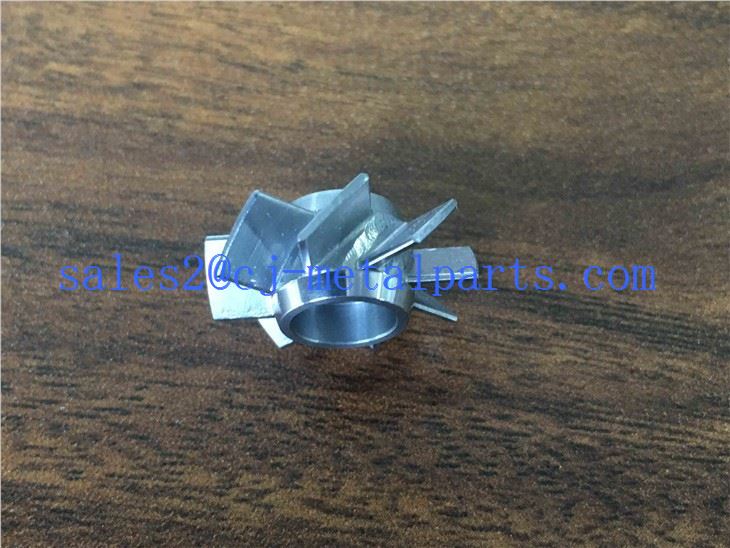
For complex-shaped components, custom fixtures may be required. These fixtures are designed to fit the specific geometry of the workpiece and provide maximum support. For example, when machining Custom Meat Grinder Blade Cnc Machined, a fixture that precisely holds the blade in place is necessary to ensure accurate machining and prevent deformation.

4. Tool Selection and Maintenance
The choice of cutting tools is also important in preventing deformation. High-quality tools with sharp cutting edges can reduce the cutting force and heat generation. For example, carbide tools are commonly used in CNC milling due to their high hardness and wear resistance.
Regular tool maintenance is crucial to ensure optimal performance. Dull or worn-out tools can increase the cutting force and cause deformation. We regularly inspect and replace cutting tools to maintain their sharpness and accuracy.
5. Cooling and Lubrication
Cooling and lubrication are essential to reduce heat generation during machining. Excessive heat can cause the material to expand and deform. Coolants can absorb the heat generated during cutting and transfer it away from the workpiece. They also help to lubricate the cutting tool, reducing friction and wear.
There are different types of coolants available, including water-based and oil-based coolants. The choice of coolant depends on the material being machined and the machining process. For example, water-based coolants are often used for aluminum machining due to their good cooling properties, while oil-based coolants may be more suitable for steel machining.
6. Machining Strategy Optimization
The machining strategy can also affect the deformation of CNC milling components. For example, roughing and finishing operations should be separated. Roughing operations are used to remove most of the material quickly, while finishing operations are used to achieve the final dimensions and surface finish. By separating these operations, we can reduce the cutting force and heat generation during the finishing process, minimizing the risk of deformation.
In addition, the order of machining operations should be carefully planned. For example, machining operations that generate high cutting forces should be performed first, followed by operations that require high precision. This can help to reduce the cumulative effect of cutting forces on the workpiece and prevent deformation.
7. Quality Control and Inspection
Quality control and inspection are essential to ensure that the machined components meet the required specifications. We use various inspection methods, such as dimensional measurement, surface roughness measurement, and visual inspection, to detect any signs of deformation.
During the machining process, in-process inspection can be performed to monitor the quality of the components. This allows us to detect and correct any potential problems early, reducing the risk of producing defective parts.
Conclusion
Preventing deformation of CNC milling components is a complex process that requires careful consideration of various factors, including material selection, cutting parameters, fixturing, tool selection, cooling and lubrication, machining strategy, and quality control. By implementing these strategies, we can ensure that our CNC milling components meet the highest quality standards and are free from deformation.
If you are interested in our CNC milling components, such as Aluminum Machined Front Panel, Custom Meat Grinder Blade Cnc Machined, and Cnc Machined Metal Colorful Holder Frame, please feel free to contact us for more information and to discuss your specific requirements. We are committed to providing high-quality CNC milling components and excellent customer service.
References
- Smith, J. (2018). CNC Machining Handbook. New York: Industrial Press.
- Jones, A. (2019). Machining Processes and Tooling. London: Elsevier.
- Brown, S. (2020). Quality Control in Manufacturing. Chicago: McGraw-Hill.