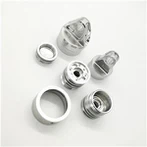
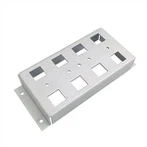
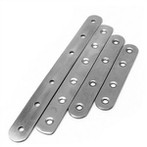
Non-standard parts processing and non-standard equipment, parts processing needs to obtain ultra-smooth processing surface and high processing accuracy, which requires the knife to have a high standard life, whether the tool has been worn, will be based on whether the surface quality of the processed surface is out of tolerance As a basis.
The standard life of diamond tools is very high, and the tool wear is very slow during high-speed cutting. Therefore, in ultra-fine cutting, the cutting speed is not restricted by the tool life, which is different from the general cutting rules.
Non-standard equipment for non-standard parts processing The cutting speed selected for part processing practice is often selected according to the dynamic characteristics of the ultra-fine machine tool used and the dynamic characteristics of the cutting system, that is, the speed with the smallest oscillation is selected. Because at this speed, the surface roughness is the smallest and the processing quality is the highest. Obtaining high-quality non-standard machined surfaces is the primary question in the processing of non-standard equipment parts. The use of high quality, especially good dynamic characteristics, ultra-fine machine tools with small oscillations can use high cutting speeds and can travel processing power.
The selection of the parameters of non-standard parts processing mainly includes the choice of cutting tool viewpoint, the choice of cutting speed, the choice of cutting depth and feed speed, etc. From past experience, we know that when machining plastic materials, it is assumed that the tool with a larger rake angle can effectively suppress the formation of the buildup. This is when the rake angle of the tool increases, the cutting force decreases, the cutting deformation is small, and the tool and chip The touch length becomes shorter, which reduces the foundation of built-up crumbs.