


Hey there! As a supplier of CNC Machining Parts, I've seen firsthand the critical role that the tool path plays in the manufacturing process. In this blog, I'm gonna break down what the tool path is, how it affects CNC machining parts, and why it's such a big deal for those looking to get high - quality components.
Let's start with the basics. The tool path in CNC (Computer Numerical Control) machining is like a roadmap for the cutting tool. It's a set of instructions that tell the CNC machine where to move the tool, at what speed, and how deep to cut into the material. These instructions are usually created using CAD (Computer - Aided Design) and CAM (Computer - Aided Manufacturing) software. The tool path takes into account the shape, size, and features of the part that needs to be machined, as well as the type of material being used and the capabilities of the CNC machine.
1. Dimensional Accuracy
One of the most significant effects of the tool path on CNC machining parts is dimensional accuracy. A well - planned tool path ensures that the part is machined to the exact specifications. For example, if you're making a part with tight tolerances, say a shaft that needs to fit precisely into a bearing, the tool path has to be spot - on.
With a proper tool path, the cutting tool moves smoothly and precisely along the intended path, minimizing errors. On the other hand, a poorly designed tool path can lead to over - cutting or under - cutting. Over - cutting means the tool removes more material than necessary, which can result in a part being out of the specified dimensions. Under - cutting, as you might guess, is when not enough material is removed. This can cause the part to be too big and not fit properly in the final assembly.
Let's take Stainless Steel Machining Parts as an example. Stainless steel is a tough material, and machining it requires a carefully planned tool path. If the tool path is incorrect, it can be really difficult to achieve the required dimensional accuracy, and you might end up with parts that are rejected.
2. Surface Finish
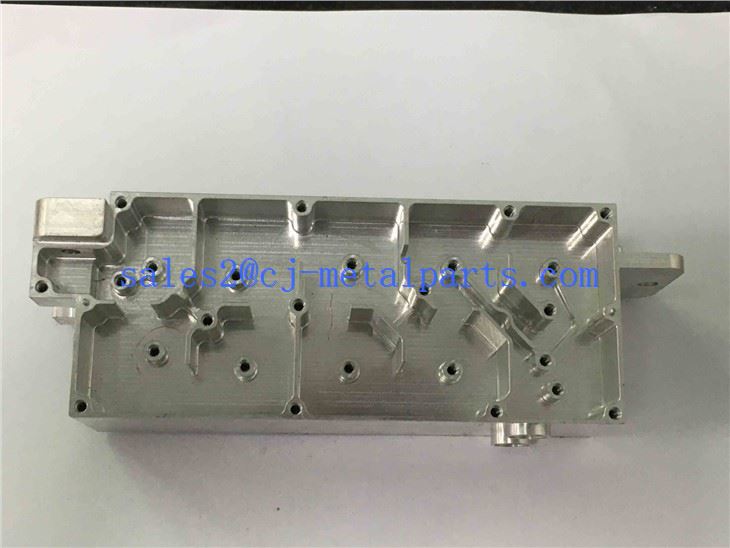
The tool path also has a huge impact on the surface finish of the CNC machining parts. A smooth surface finish is often crucial, especially for parts that will be in contact with other components or need to have a certain aesthetic appeal.
When the tool path is optimized, the cutting tool makes clean, consistent passes over the material. This results in a fine surface finish with minimal roughness. For instance, in Brass Cnc Machining Parts, brass is a relatively soft material. A well - designed tool path can help achieve a shiny, smooth surface finish that not only looks good but also reduces friction in applications where the parts are moving.
Conversely, an improper tool path can cause the tool to bounce or chatter, leaving marks on the surface of the part. These marks can reduce the quality of the part and may require additional finishing processes, such as polishing, which add time and cost to the manufacturing process.

3. Tool Life
Tool life is another important factor affected by the tool path. A cutting tool is an expensive investment, and maximizing its lifespan can significantly reduce the overall cost of production.
An optimized tool path distributes the cutting forces evenly across the tool. This means that the tool doesn't experience excessive wear and tear in one particular area. When the tool path is set up correctly, the tool can make clean cuts without being subjected to unnecessary stress.
For example, in Machining CNC Prototype, where quick turnaround times are often required, it's essential to get the most out of the cutting tools. A well - planned tool path can extend the tool life, reducing the frequency of tool changes and keeping the production process running smoothly.
On the flip side, a bad tool path can cause the tool to wear out quickly. For instance, if the tool is constantly rubbing against the material instead of making clean cuts, it will heat up, and the cutting edges will dull faster. This not only leads to increased tool costs but can also affect the quality of the machined parts as the worn - out tool may not be able to cut accurately.
4. Machining Time
The tool path can have a significant impact on machining time, which is directly related to production costs. An efficient tool path minimizes the distance the tool has to travel and the number of tool changes required.
When the tool path is optimized, the CNC machine can move the tool quickly and efficiently from one cutting operation to the next. This reduces the overall time it takes to machine a part. For example, if a part has multiple holes to be drilled and pockets to be milled, a well - planned tool path can arrange these operations in a logical sequence, so the machine doesn't have to waste time moving back and forth across the workpiece.
In contrast, a poorly designed tool path can cause the machine to make unnecessary movements. The tool might have to travel long distances to reach the next cutting position, or there could be frequent and unnecessary tool changes. This can significantly increase the machining time and make the production process less cost - effective.
5. Material Removal Rate
The material removal rate is how much material the cutting tool can remove in a given amount of time. A good tool path can maximize the material removal rate while still maintaining the quality of the part.
By optimizing the tool path, the cutting tool can make the most efficient use of its cutting edges. It can cut at the right depth and feed rate to remove material quickly. For example, in some cases, a roughing tool path can be designed to remove large amounts of material in the beginning of the machining process, and then a finishing tool path can be used to achieve the final shape and surface finish.
However, if the tool path is not planned well, the material removal rate may be too slow. The tool might be taking very shallow cuts or moving at a slow speed, which will increase the time it takes to machine the part. Or, if the tool tries to remove too much material at once, it can cause the tool to break or result in a poor - quality surface finish.
Connecting with the Process
As a CNC Machining Parts supplier, I've dealt with all sorts of projects and materials. Each one requires a unique approach to the tool path. Whether it's a simple bracket or a complex Machining CNC Prototype, getting the tool path right is essential for delivering high - quality parts.
If you're in the market for CNC Machining Parts, whether it's Stainless Steel Machining Parts or Brass Cnc Machining Parts, it's crucial to work with a supplier who understands the importance of the tool path. At our end, we use state - of - the - art CAD/CAM software to design the most efficient tool paths for each project. We also have experienced machinists who can make adjustments on the fly to ensure that the final parts meet your exact specifications.
If you're interested in learning more or have a project in mind, I encourage you to reach out for a consultation. We'd be happy to discuss your needs and show you how our expertise in tool path design can help you get the best - quality CNC Machining Parts at a competitive price.
References
- Boothroyd, G., Dewhurst, P., & Knight, W. (2011). Product Design for Manufacture and Assembly. Routledge.
- Groover, M. P. (2016). Fundamentals of Modern Manufacturing: Materials, Processes, and Systems. Wiley.
- Stephenson, D. A., & Agapiou, J. S. (2016). Metal Cutting Theory and Practice. CRC Press.