


Hey there! As a supplier of brass connectors, I often get asked about the bending strength of these nifty little components. So, I thought I'd take some time to break it down for you and give you the lowdown on what makes brass connectors so strong when it comes to bending.
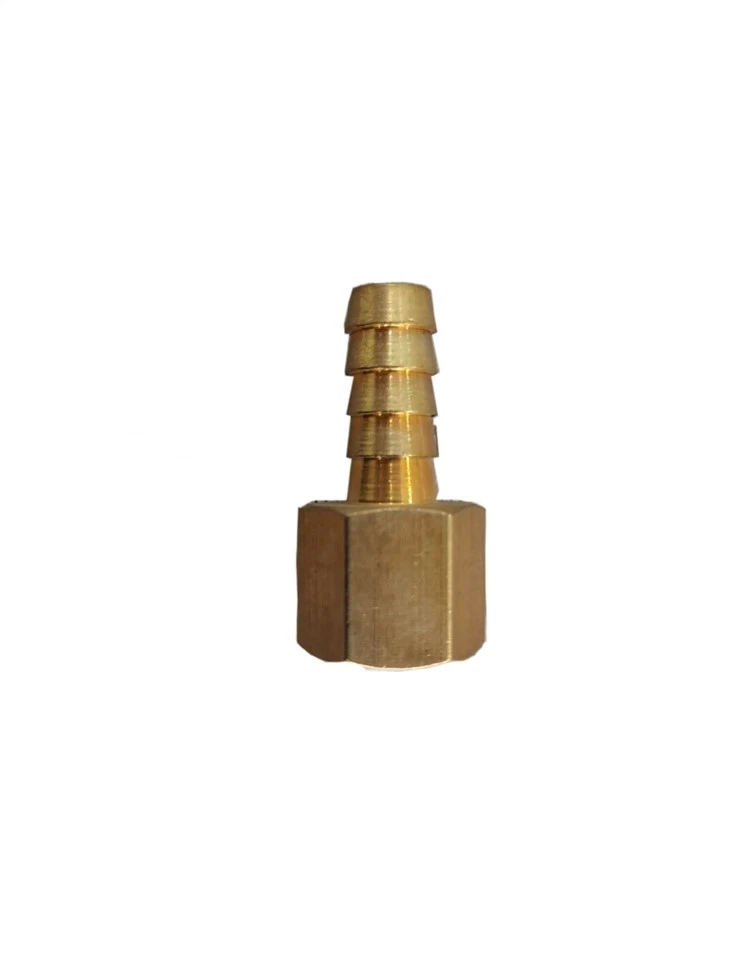

First off, let's talk a bit about brass itself. Brass is an alloy made up mainly of copper and zinc. The exact ratio of these two metals can vary, which gives brass different properties depending on its composition. This versatility is one of the reasons brass is such a popular choice for making connectors. It's corrosion-resistant, has good electrical conductivity, and can be easily machined into various shapes and sizes.
Now, onto the bending strength. Bending strength refers to the maximum amount of stress a material can withstand before it starts to deform permanently. In the case of brass connectors, this is crucial because they often need to be bent or shaped during installation or use. For example, a Brass Connector for Hose might need to be bent slightly to fit into a specific hose setup, and it needs to be able to handle that stress without breaking or cracking.
The bending strength of brass connectors depends on several factors. One of the most important is the type of brass used. Different grades of brass have different mechanical properties, including bending strength. For instance, some brass alloys are designed to be more ductile, which means they can be bent more easily without breaking. These are often used in applications where the connector needs to be flexible, like in electrical wiring. On the other hand, there are brass alloys that are stronger and more rigid, which are better suited for applications where the connector needs to maintain its shape under high stress, such as in plumbing or industrial machinery.
Another factor that affects the bending strength of brass connectors is their manufacturing process. The way a connector is formed can have a big impact on its strength. For example, connectors that are forged tend to have better bending strength than those that are cast. Forging involves shaping the brass under high pressure, which aligns the metal grains and makes the connector more resistant to deformation. Casting, on the other hand, involves pouring molten brass into a mold, which can result in a more porous structure and lower bending strength.
The size and shape of the connector also play a role in its bending strength. Generally, thicker and wider connectors are stronger and can withstand more bending stress than thinner and narrower ones. The shape of the connector can also affect its strength. For example, connectors with a more complex shape or with sharp corners may be more prone to cracking or breaking under bending stress than those with a simpler, more rounded shape.
To test the bending strength of brass connectors, manufacturers use a variety of methods. One common method is the three-point bending test. In this test, a sample of the connector is placed on two supports and a load is applied at the center. The amount of load required to cause the connector to bend or break is measured, and this value is used to determine the bending strength of the material. Another method is the four-point bending test, which is similar to the three-point test but uses two loads instead of one. This method is often used for testing larger or more complex connectors.
So, why is the bending strength of brass connectors so important? Well, for starters, it ensures the reliability and durability of the connectors. If a connector can't withstand the bending stress it's subjected to during installation or use, it may fail prematurely, which can lead to costly repairs or even safety hazards. For example, a Brass Electrical Wire Connectors that breaks due to bending stress could cause an electrical short circuit, which could lead to a fire or other serious problems.
In addition, the bending strength of brass connectors can also affect their performance. A connector that can be bent easily without breaking can be more easily installed in tight spaces or complex setups, which can save time and money during the installation process. On the other hand, a connector that is too rigid and can't be bent may not fit properly, which can lead to leaks or other performance issues.
As a supplier of brass connectors, I understand the importance of providing high-quality products with excellent bending strength. That's why we use only the best grades of brass and state-of-the-art manufacturing processes to ensure that our connectors meet the highest standards of quality and performance. Whether you're looking for a Brass Dual Tap Connector for your plumbing system or a brass connector for your electrical wiring, you can trust that our products will be strong, reliable, and easy to install.
If you're in the market for brass connectors, I encourage you to get in touch with us to discuss your specific needs. We have a wide range of connectors available in different sizes, shapes, and grades, and our team of experts can help you choose the right connector for your application. Whether you're a DIY enthusiast or a professional contractor, we're here to provide you with the best products and service possible. So, don't hesitate to reach out and let's start a conversation about how we can help you with your brass connector needs.
References
- ASM Handbook, Volume 2: Properties and Selection: Nonferrous Alloys and Special-Purpose Materials. ASM International.
- Metals Handbook Desk Edition, Third Edition. ASM International.
- Mechanical Testing and Evaluation. ASM International.